RAG with LangChain and LlamaIndex: What Pipeline Builders Need to Know
Search "rag with langchain and llamaindex" and you'll find the same recycled comparison everywhere: two definitions, a feature table, and a vague "it depends." The honest answer is that both frameworks now overlap heavily in 2026, so the real question isn't which one wins. It's which one fits your specific pipeline and memory needs, and what you'll have to build around either of them.
Here's the gap nobody covers: agent memory and persistent context. Neither framework handles it natively, and that's the part that breaks production systems. GigaRAG exists specifically for that gap, but this guide won't pretend it's a drop-in replacement for everything.
What you'll get: a practical breakdown of LlamaIndex and LangChain, when to use them together, the limitations both share, and a decision framework that tells you exactly where to start based on whether your pipeline is retrieval-heavy, agent-heavy, or memory-intensive.
| At a glance | Details |
|---|---|
| Core overlap | Both do RAG, agents, and indexing |
| LangChain strength | Broad integrations and agent tooling |
| LlamaIndex strength | Data ingestion and retrieval primitives |
| Memory gap | Neither persists context across sessions natively |
| Best practice | Combine them, add a memory layer |
| Decision driver | Your retrieval needs, not brand loyalty |
In This Guide
- What Is LlamaIndex?
- LangChain vs LlamaIndex for RAG Pipelines
- What Is LangChain?
- Rag With Langchain And Llamaindex: A Step-by-Step Guide
- LangChain vs LlamaIndex: Key Differences for RAG
- Can You Use LangChain and LlamaIndex Together?
- Agent Memory and Persistent Context: The Gap Neither Framework Fills
- What You Should Not Expect from Either Framework
- Is LlamaIndex Free for Commercial Use?
- How to Choose: A Decision Framework for RAG Pipeline Builders
- Final Thoughts on RAG with LangChain and LlamaIndex
What Is LlamaIndex?
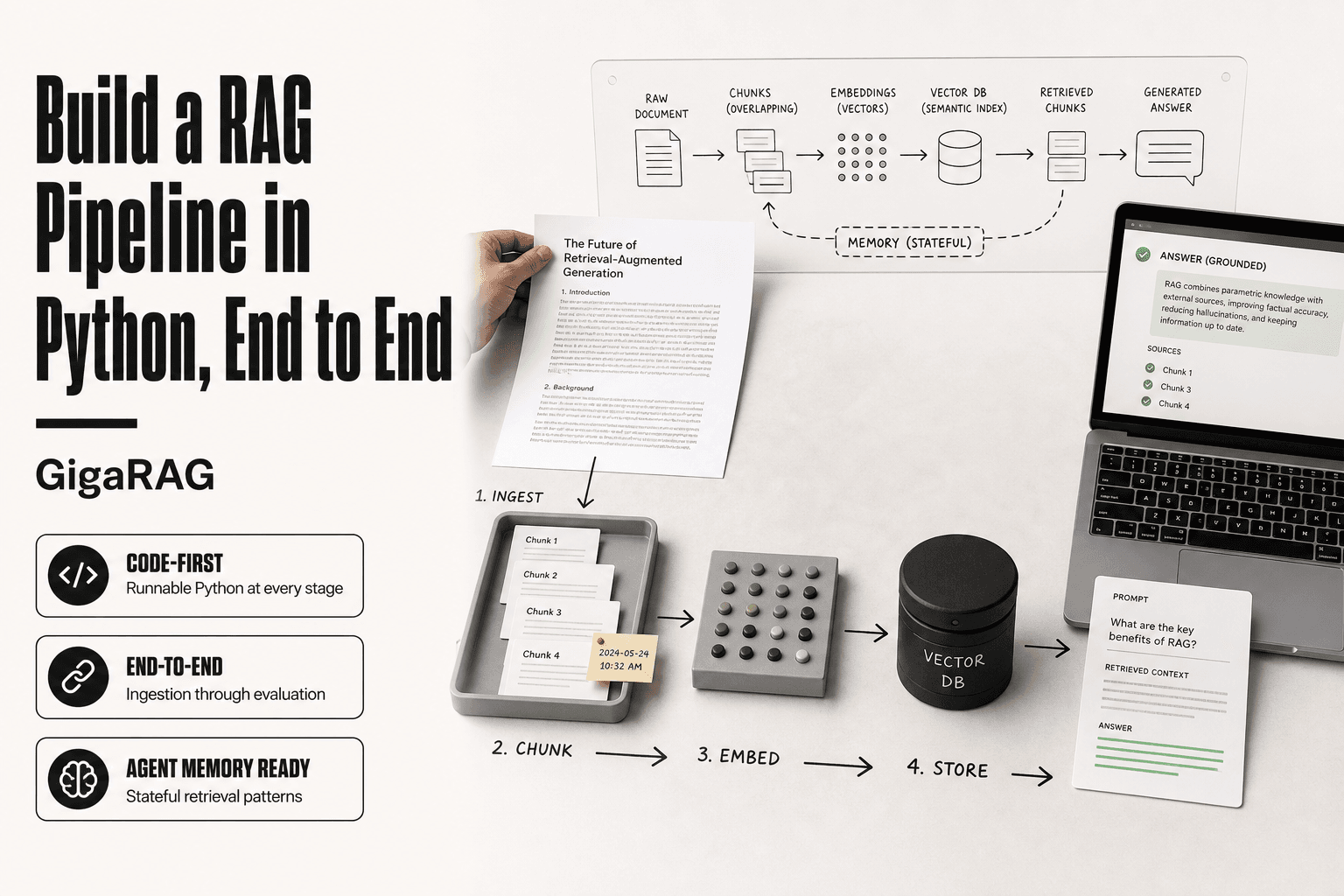
LlamaIndex is a data framework for building RAG pipelines. It handles the unglamorous work: loading documents, chunking them, embedding them, and indexing them so a language model can retrieve the right pieces at query time.
Core focus: data indexing and retrieval
The framework treats your documents as the source of truth. You point it at files, it splits them into nodes, and it builds an index over those nodes. Retrieval is the star. LlamaIndex gives you vector search, keyword search, and hybrid combinations without writing the plumbing yourself.
Query engines and response synthesis
A query engine takes a question, retrieves relevant nodes, and hands them to an LLM with a prompt. The synthesis step is where LlamaIndex earns its keep: it manages context windows, re-ranks results, and stitches citations into the answer.
Where LlamaIndex excels in RAG pipelines
Retrieval-heavy pipelines. If your problem is "find the right chunks fast and feed them cleanly," LlamaIndex is the shorter path. Agent orchestration is not its home turf.
[!note] Both LangChain and LlamaIndex are open-source and free to use, including for commercial projects, though they offer paid cloud platforms with additional features.
LangChain vs LlamaIndex for RAG Pipelines
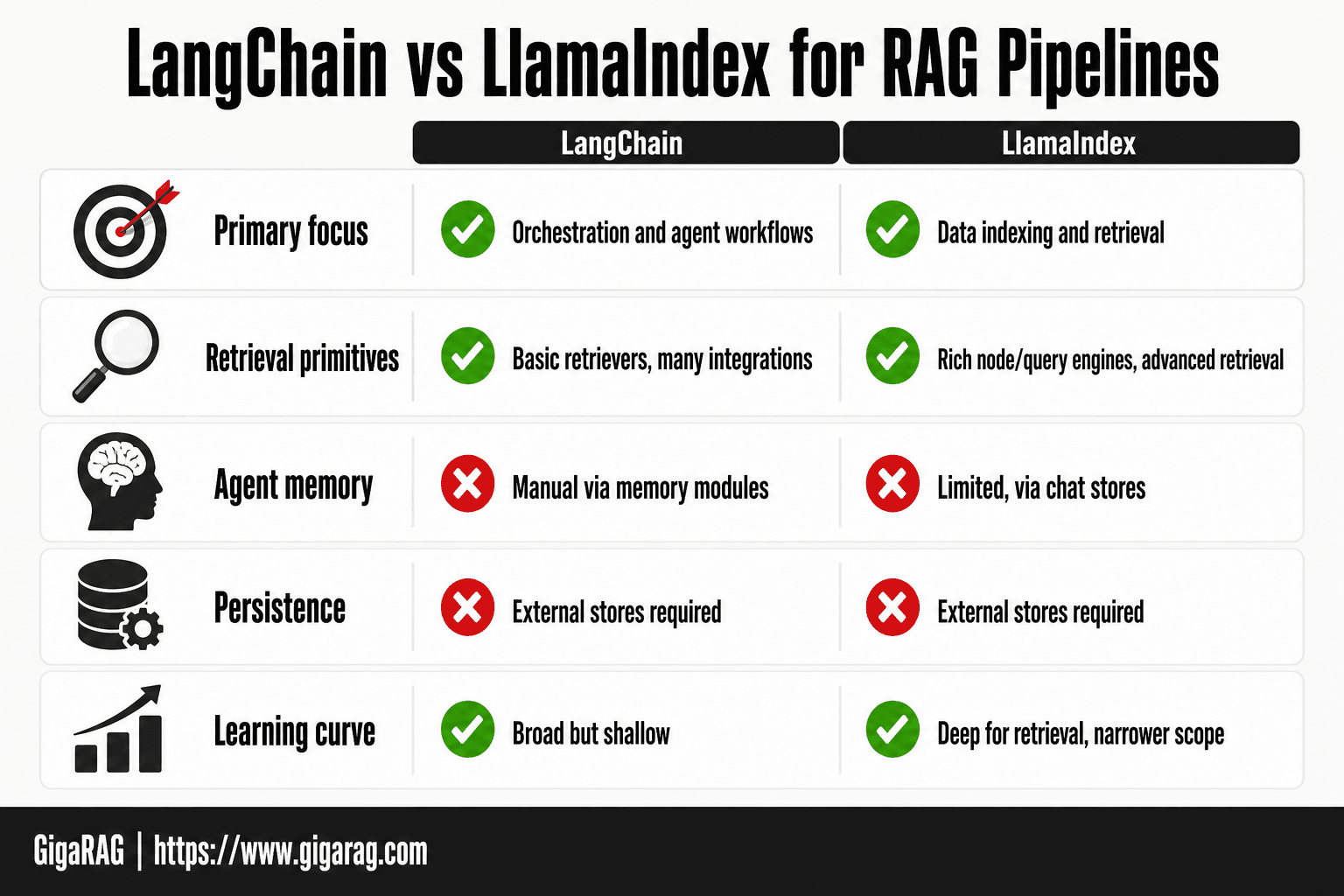
| Factor | LangChain | LlamaIndex |
|---|---|---|
| Primary focus | Orchestration and agent workflows | Data indexing and retrieval |
| Retrieval primitives | Basic retrievers, many integrations | Rich node/query engines, advanced retrieval |
| Agent memory | Manual via memory modules | Limited, via chat stores |
| Persistence | External stores required | External stores required |
| Learning curve | Broad but shallow | Deep for retrieval, narrower scope |
What Is LangChain?
LangChain is an orchestration framework. It wires together LLMs, tools, retrievers, and memory into chains and agents. Where LlamaIndex treats documents as the source of truth, LangChain treats the workflow as the source of truth.
Core focus: orchestration and agents
You build pipelines from modular components: prompt templates, models, output parsers, and retrievers. Chains connect these pieces in sequence. Agents go further, letting the LLM decide which tool to call next based on intermediate results.
LangGraph and LangSmith in production
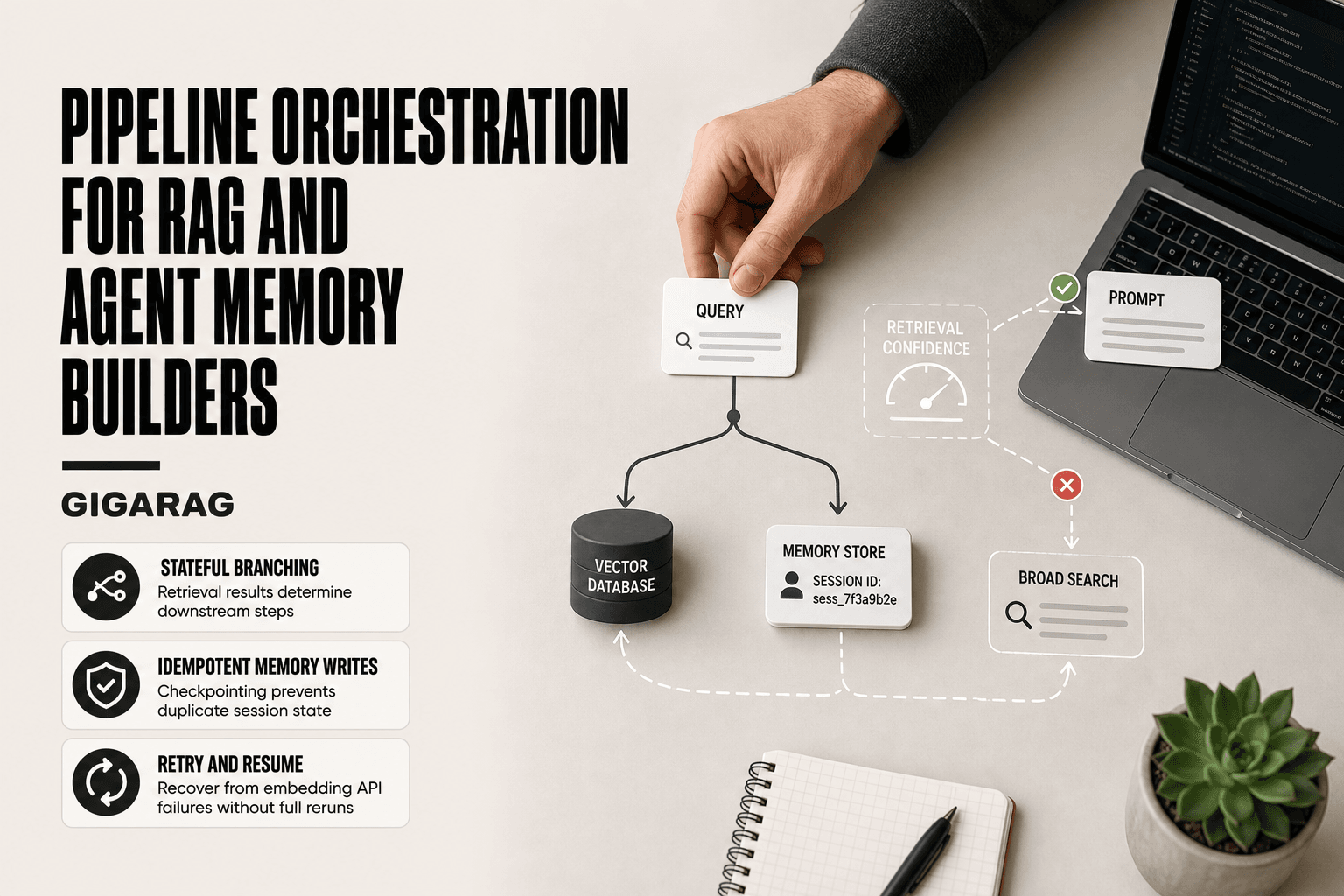
LangGraph adds stateful orchestration on top of LangChain, with explicit control over loops, branching, and checkpoints. LangSmith handles tracing, evaluation, and debugging. Together they cover what raw LangChain leaves open: visibility into what your agent actually did.
Where LangChain excels in RAG pipelines
Agent-heavy pipelines. If your RAG needs multi-step reasoning, tool use, or conditional retrieval, LangChain gives you the scaffolding. Yes, you can do RAG with LangChain. It's just more assembly than LlamaIndex for straightforward retrieval.
[!tip] For memory-intensive pipelines, design your own persistent context layer early—don't rely on framework defaults—and test retrieval quality with real user queries before scaling.
Rag With Langchain And Llamaindex: A Step-by-Step Guide
- Define your retrieval requirements and data sources.
- Use LlamaIndex to ingest, chunk, and index your documents.
- Wrap LlamaIndex query engines as tools in LangChain agents.
- Add a persistent memory store (e.g., vector DB or SQL) for context.
- Implement retrieval evaluation and iterate on chunking and prompts.
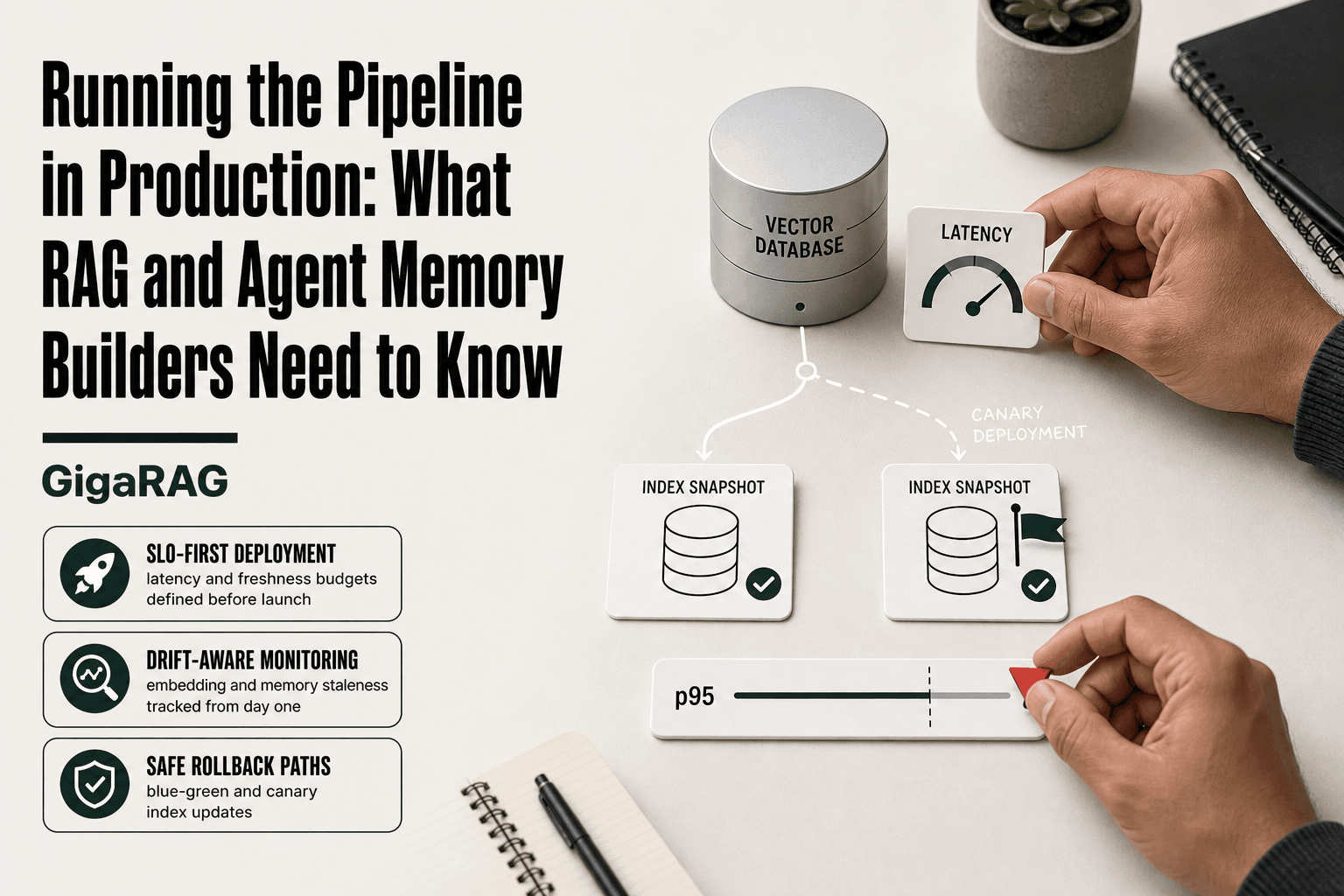
- Deploy with monitoring for latency and retrieval quality.
LangChain vs LlamaIndex: Key Differences for RAG
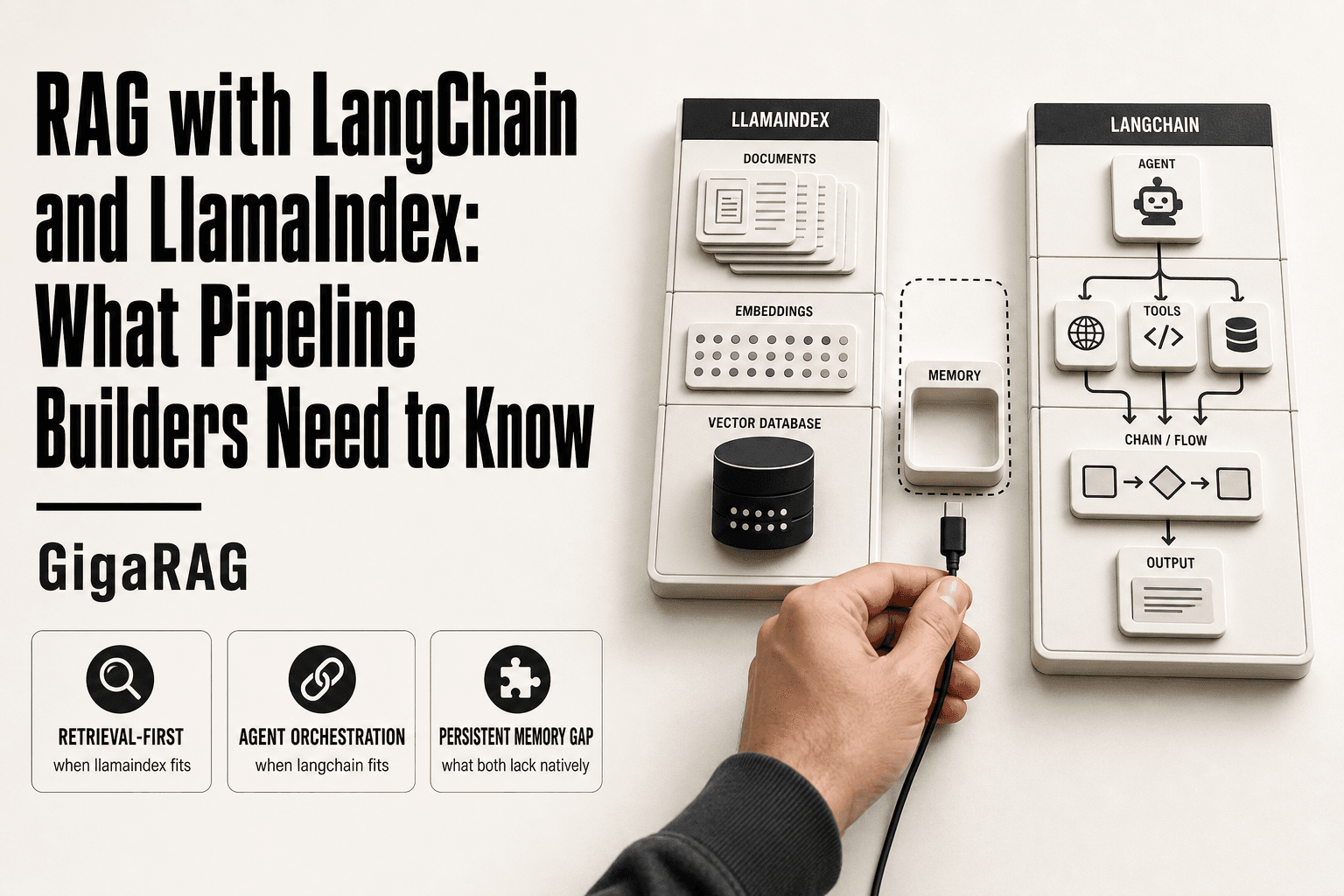
The honest answer: use LlamaIndex when retrieval quality drives your pipeline, and LangChain when agent orchestration does. Both handle basic RAG. The differences show up in data handling, query engines, and how much you build yourself.
Data ingestion and indexing approach
LlamaIndex treats indexing as the core problem. Document loaders, chunking strategies, and vector store integrations are first-class. You configure a pipeline, not assemble one. LangChain offers the same pieces but as modular components you wire together yourself. That flexibility costs you time.
Retrieval and query engine capabilities
LlamaIndex ships query engines that handle retrieval, reranking, and response synthesis in one call. LangChain splits these into retrievers and chains, which means more control but more assembly. For pure retrieval quality, LlamaIndex's defaults beat LangChain's out of the box.
Agent and orchestration maturity
LangChain wins here. LangGraph gives you stateful loops, branching, and checkpointing that LlamaIndex doesn't match. If your RAG pipeline needs multi-step reasoning or tool use, LangChain is the stronger starting point. LlamaIndex has agents too, but they're newer and less battle-tested.
Ecosystem, integrations, and vendor lock-in
Both integrate with the same vector stores, embedding models, and LLM providers. LangChain's ecosystem is larger, but that's a double-edged sword: more integrations, more breaking changes. LlamaIndex is more stable but narrower. Neither locks you in hard, since both are open source.
Can You Use LangChain and LlamaIndex Together?
Yes. You can use both in the same pipeline. The honest answer is that it works, but it adds real complexity you'll need to justify.
A practical integration pattern
The cleanest pattern is LlamaIndex for retrieval, LangChain for orchestration. Build your index and query engine in LlamaIndex. Wrap that query engine as a LangChain tool. Then let a LangChain agent decide when to call it.
Here's what that looks like in practice: you load documents, chunk them, and build a vector index with LlamaIndex. You expose the query engine through a thin wrapper. LangChain's agent treats it as one tool among several, alongside a web search tool or a database lookup. The agent routes questions to the right tool.
When combining both is worth the complexity
It's worth it when you need LlamaIndex's retrieval quality and LangChain's agent orchestration in the same system. If your pipeline does multi-step reasoning over a curated document set, this split plays to each framework's strength. You get better retrieval than LangChain's defaults and better agent control than LlamaIndex's built-in agents.
When combining both is a mistake
Don't combine them for a simple RAG pipeline. One framework handles that fine. Adding both means two dependency trees, two sets of abstractions, and debugging across a boundary you created yourself. If you can't name the specific thing each framework does better in your pipeline, you don't need both.
Agent Memory and Persistent Context: The Gap Neither Framework Fills
Agent memory is the difference between a RAG pipeline that answers one question and an agent that remembers the conversation, the user's preferences, and what it already retrieved. Neither LangChain nor LlamaIndex ships this out of the box.
What agent memory means for RAG pipelines
Memory in a RAG pipeline isn't just storing chat history. It's three things: conversation state across sessions, persistent context about the user or project, and a working buffer of retrieved chunks the agent can reference without re-querying. Without these, every turn starts cold.
Why LangChain and LlamaIndex fall short
LangChain offers memory buffers, but they're in-memory and session-scoped. Restart the process and they're gone. LlamaIndex has chat engines with some history, but nothing that survives a deployment or scales past a single conversation. Both treat memory as a feature you assemble, not a capability you get.
What production memory actually requires
Production memory needs durable storage, retrieval over past context, and a way to decide what's still relevant. That means a vector store for memory, not just documents, plus eviction policies and relevance scoring. You'll build this yourself on either framework. It's not a weekend project.
Where GigaRAG fits
GigaRAG is built specifically for this gap: persistent agent memory with retrieval over conversation history and project context. It's not a replacement for LangChain or LlamaIndex. It's the memory layer you'd otherwise have to write. If your pipeline needs agents that remember, plan for it from the start.
What You Should Not Expect from Either Framework
Both frameworks are capable but incomplete. The gap between a tutorial and a production system is where most teams stall.
No turnkey production RAG
Neither LangChain nor LlamaIndex gives you a deployable RAG system. You get building blocks: loaders, retrievers, chains, query engines. Wiring them into something that handles auth, rate limits, retries, and monitoring is your job. Expect weeks of custom code, not a weekend.
Memory and persistence are DIY
Memory buffers vanish on restart. Persistence across sessions, users, or deployments means building your own storage layer. Both frameworks assume you'll bolt that on.
Evaluation and observability gaps
LangSmith helps with tracing, but it's a paid add-on. LlamaIndex has some eval tools, but they're basic. Neither gives you production-grade metrics out of the box: retrieval precision, answer faithfulness, latency percentiles. You'll assemble that yourself.
Performance bottlenecks at scale
Both frameworks add abstraction overhead. At high query volumes, that overhead shows up. You'll profile, cache, and optimize retrieval paths manually. Don't expect either to handle scale without tuning.
Is LlamaIndex Free for Commercial Use?
Yes. LlamaIndex is MIT-licensed, which means you can use it in commercial products, modify the source, and distribute your changes without paying a fee or releasing your own code.
The MIT license covers the core framework. That's the code you install from pip. You can build a paid SaaS product on top of it, embed it in an internal tool, or ship it inside a client application. No royalties, no copyleft obligations.
The caveat is the ecosystem around it. Some integrations, connectors, or managed services built on LlamaIndex have their own terms. If you use a hosted vector database, an LLM API, or a commercial observability tool alongside it, those come with separate pricing and licenses. The framework itself stays free, but your total stack won't be.
How to Choose: A Decision Framework for RAG Pipeline Builders
The honest answer is that your pipeline's shape decides the framework, not the other way around. Start with what your system does most.
Retrieval-heavy pipelines: start with LlamaIndex
If your pipeline spends most of its time ingesting documents, chunking them, embedding them, and running queries against a vector store, LlamaIndex is the tighter fit. Its data connectors and indexing abstractions are built for exactly that loop. You'll write less glue code to get from raw files to a working query engine.
Agent-heavy pipelines: start with LangChain
If your system routes between tools, maintains conversation state, or chains multiple LLM calls with conditional logic, LangChain's orchestration layer saves you real work. LangGraph gives you explicit control over agent state and branching. That's the part LlamaIndex treats as an afterthought.
Memory-intensive pipelines: plan beyond both
Neither framework handles persistent agent memory natively. If your agents need to remember context across sessions, across users, or across long-running tasks, you'll build that layer yourself or reach for a specialized option like GigaRAG. Don't discover this gap three weeks into a build.
A simple decision checklist
- Retrieval is the bottleneck? Start with LlamaIndex.
- Agent orchestration is the bottleneck? Start with LangChain.
- Memory across sessions matters? Plan for GigaRAG or custom state management from day one.
- Both retrieval and agents matter? Combine them, but budget for integration overhead.
- Production evaluation and observability are requirements? Budget custom code either way.
Final Thoughts on RAG with LangChain and LlamaIndex
Both frameworks do real work. Neither is the whole answer.
LangChain gives you orchestration and agent control. LlamaIndex gives you indexing and retrieval that just works. For memory-intensive production RAG, you'll still build the persistent context layer yourself, or bring in something like GigaRAG that treats memory as the core problem rather than a side feature.
The decision stays simple: retrieval-heavy means LlamaIndex, agent-heavy means LangChain, memory-heavy means plan beyond both. RAG with LangChain and LlamaIndex is a starting point, not a destination.
Frequently Asked Questions
Can I use LangChain and LlamaIndex together?
Yes, they are commonly used together. LlamaIndex handles data ingestion and retrieval, while LangChain orchestrates agents and tools, allowing you to leverage the strengths of both.
Can you do RAG with LangChain?
Yes, LangChain provides components for building RAG pipelines, including document loaders, text splitters, retrievers, and integration with vector stores. However, its retrieval primitives are less specialized than LlamaIndex's.
When to use LangChain vs LlamaIndex?
Choose LangChain for complex agent workflows and broad integrations; choose LlamaIndex for advanced retrieval and data indexing. Many production systems combine both.
Is LlamaIndex free for commercial use?
Yes, LlamaIndex is open-source under the MIT license, so it is free for commercial use. There is also a paid cloud offering with additional features.
How do LangChain and LlamaIndex handle agent memory?
Neither framework provides robust persistent memory out of the box. LangChain offers memory modules that typically require external storage, while LlamaIndex has limited chat memory support. For production, you often need to build a custom memory layer.
Which framework is better for production RAG?
It depends on your needs. LlamaIndex excels at retrieval quality and data handling, while LangChain is better for orchestration and agents. For production, consider using both and adding a dedicated memory solution.
About GigaRAG
GigaRAG is for agent memory and RAG pipeline builders. get this right. Whether you are working through rag with langchain and llamaindex or something adjacent, we publish what we have actually tested, including where it falls short.